
2024 Passion Week Devotional, Day 7: Reflect on the Crucifixion
Saturday
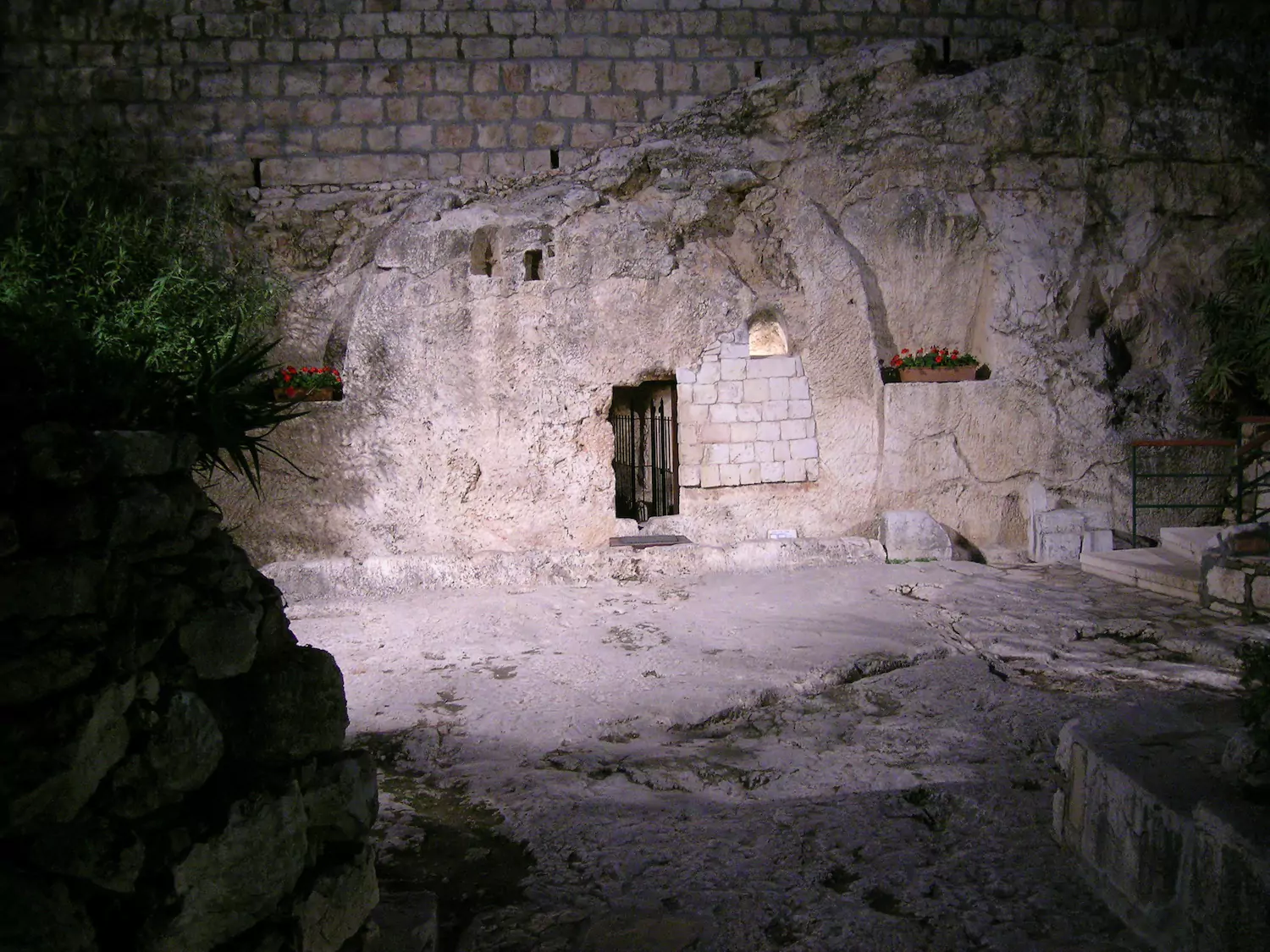
Friday late afternoon, right before sundown, the start of the Jewish Sabbath, the Council members Joseph of Arimathea and Nicodemus bury Jesus (Matt. 27:57–61; Mark 15:42–47; Luke 23:50–56; John 19:38–42).
Sabbath Rest
No work must be done on the Sabbath, so that day of Passion week is very quiet. As Luke writes, “On the Sabbath they rested according to the commandment” (Luke 23:56). The Gospels don’t provide any information about the disciples’ activities that day. However, we may presume that they were utterly devastated, likely huddling together fearfully behind closed, or even locked, doors, wondering if they would be the next targets of persecution. Doubtless, they were exhausted and sleep-deprived, railing from the events surrounding the crucifixion. While he was with them, Jesus had repeatedly told them he would be crucified but on the third day rise from the dead, though there is little evidence that the disciples believed him and held out any hope of such a miraculous coming back to life, regardless of the fact that Jesus himself had raised several people from the dead during the course of his earthly ministry.
Posting of Guards
Ironically, the Jewish leaders, who had opposed Jesus so strenuously throughout his entire earthly ministry, seem to have more faith in Jesus’ prediction than his disciples. They go to Pilate and tell him that the “imposter” (Jesus!) had asserted that he would rise after three days (Matt. 27:62–66). Now, if the disciples were to steal Jesus’ body and claim he had risen, they tell Pilate, “the last fraud will be worse than the first” (Matt. 27:63–64). They demanded that Pilate post a guard in front of the tomb so no unauthorized person could enter and no foul play could occur. That said, their concern is only that no one can go into the tomb, rather than believing that Jesus will come out of the tomb! Pilate seems grumpy; the stone is sealed, and a guard is posted. Ironically, the posting of the guard will later serve to prove that the disciples did not steal Jesus’ body and thus provide strong evidence for the genuineness of Jesus’ resurrection.
Pastoral Implications
When you do the math, Jesus wasn’t really dead and in the tomb for three entire days. He died around 3 o’clock in the afternoon on Friday and rose very early Sunday morning. So, Jesus lay in the tomb for only one full day, the Jewish Sabbath, plus a very short time before sundown on Friday and a few hours after sundown on Saturday into the early morning hours on Sunday. Jesus may have been in the tomb for no more than 30 hours or even less.
In any case, as we think about Saturday, the day between the crucifixion and the resurrection, we can take the opportunity to reflect on what Jesus’ crucifixion means. We can also expectantly await the news of Jesus’ resurrection the following day. In one sense, Saturday was the “Day of No Hope.” But the hopelessness of Jesus’ followers only provides an even starker contrast between God, who can do all things (including raising people from the dead!), and our own sinfulness and helplessness.
We cannot save ourselves. We depend completely and utterly on another, the Lord Jesus Christ, to save us. Salvation is entirely by grace, through faith, not by human works. Praise God that Jesus did what we could never have done. And praise God that he is a gracious God: “The LORD, the LORD, a God merciful and gracious, slow to anger, and abounding in steadfast love and faithfulness, keeping steadfast love for thousands, forgiving iniquity and transgression and sin” (Exod. 34:6–7).
©2024 Andreas Köstenberger. Used with permission.
Related
Passion Week Devo: Palm Sunday
Passion Week Devo, Day 2: The Cursing of the Fig Tree and the Cleansing of the Temple
Passion Week Devo, Day 3: All You Can Do is Share the Gospel
Passion Week Devo, Day 4: Open People’s Eyes to Spiritual Warfare
Passion Week Devo, Day 5: Remembering the Lord’s Supper
Passion Week Devo, Day 6: What Jesus Accomplished on the Cross
About The Author

Andreas Köstenberger
Andreas Köstenberger is host at Oak Tree Cottage, a hospitality and coaching ministry for pastors, missionaries, and Christian leaders. He is also cofounder of Biblical Foundations and theologian in residence at Fellowship Raleigh.